Evolving Game-Playing Agents with LLMs
Despite amazing progress in generative AI, even the largest and smartest LLMs have serious limitations in their reasoning abilities, as shown by results on game-playing benchmarks.
However, LLMs excel at program synthesis and code generation, and provide a welcome turbo-charge for evolutionary algorithms – we can manually inject and evolve ideas and code. In combination with existing and newly evolving statistical planning algorithms we can generate competent agents for a variety of games and real-world problems very quickly.
In this talk I’ll outline some of the open-source and subscription systems that support this approach, and look at the latest results on some challenging games: at the time of writing there is a clear and wonderful place for human engineers in the process, especially around ideation, creative direction and critical evaluation, but who knows how long this will last!
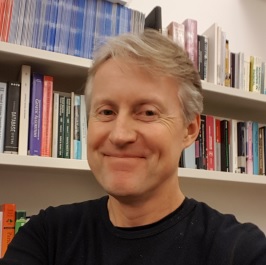
Simon Lucas
Simon Lucas is a full professor of AI in the School of Electronic Engineering and Computer Science at Queen Mary University of London where he leads the Game AI Research Group. He was previously Head of School of EECS at QMUL. He recently spent two years as a research scientist / software engineer in the Simulation-Based Testing team at Meta, applying simulation-based AI to automated testing.
Simon was the founding Editor-in-Chief of the IEEE Transactions on Games and co-founded the IEEE Conference on Games, was VP-Education for the IEEE Computational Intelligence Society and has served in many conference chair roles. His research is focused on simulation-based AI (e.g. Monte Carlo Tree Search, Rolling Horizon Evolution), bandit-based optimisation, and LLMs.
The dynamics of moving together in fish schools and autonomous swarms
Coordinated collective motion is one of the most striking and puzzling phenomena in nature. Fish schools turn as if they were a single organism, bird flocks reorganize in milliseconds, and animal groups respond to threats with extraordinary coherence, all without leaders or centralized control. How does such coordination emerge from purely local interactions? How much social information does an individual really use? And can we harness these biological principles to design more adaptive artificial systems?
In this talk, I will present an integrated research program that combines behavioral biology, physics, immersive virtual reality, and swarm robotics to address these questions. Starting from high-resolution three-dimensional tracking of schooling fish, we reconstruct the precise social interaction rules that govern attraction and alignment between individuals. We then validate these rules through simulations and, more decisively, through closed-loop virtual reality experiments in which a real fish interacts in real time with one or several digital twins governed by the same model. These experiments reveal a striking principle: fish strongly filter social information and effectively coordinate with their single most influential neighbor. Finally, I will show how these minimal interaction rules can be transferred to autonomous drone swarms, where tuning the system near the critical transition between swarming and schooling dramatically enhances collective responsiveness to external threats. Together, these results illuminate the mechanisms of coordinated motion in living systems and open new avenues for engineering resilient, adaptive collective intelligence.
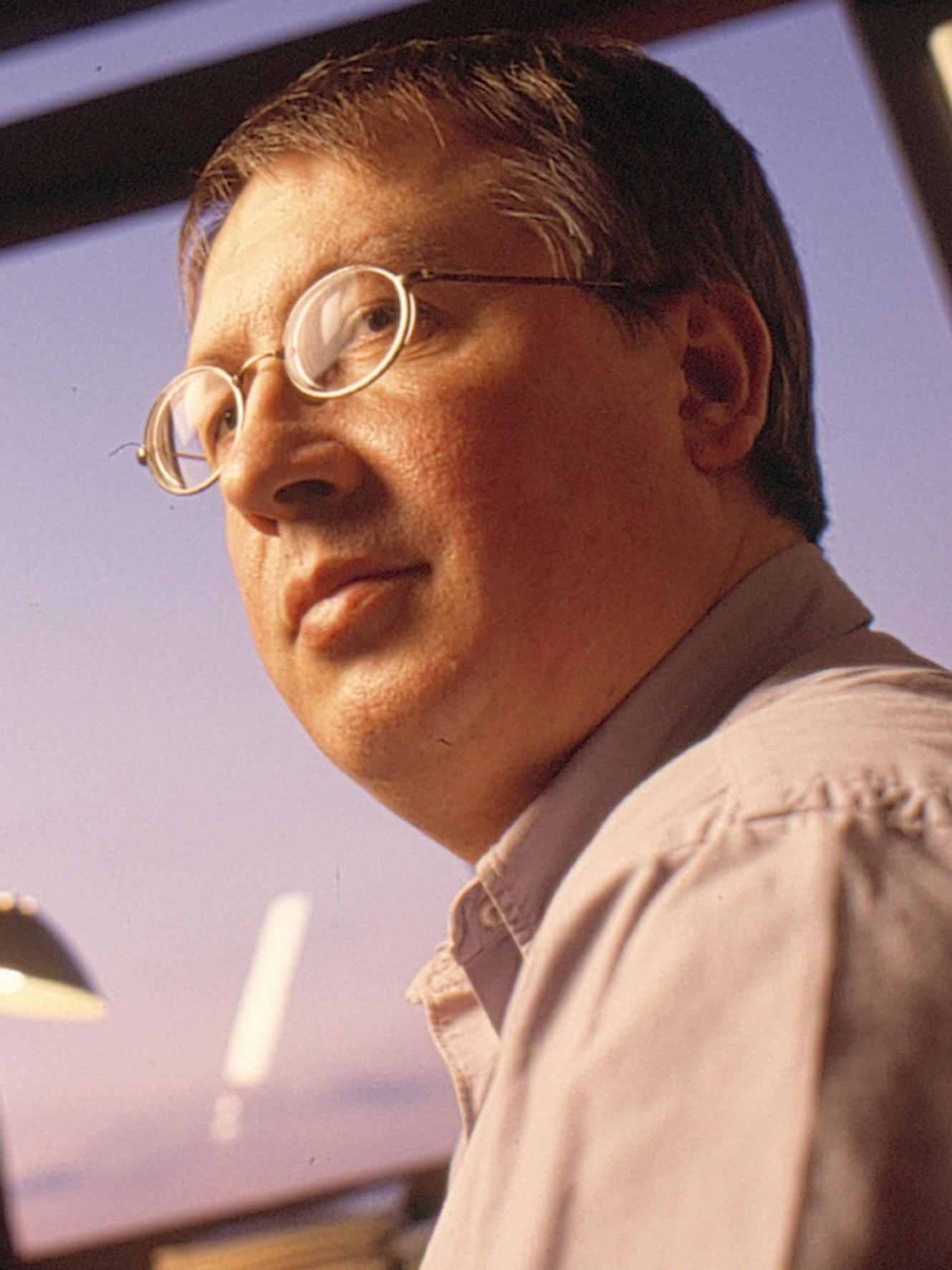
Guy Theraulaz
Guy Theraulaz is a senior research fellow at the CNRS and an expert in the study of collective animal behavior. He is also a leading researcher in the field of swarm intelligence, primarily studying social insects but also distributed algorithms, e.g. for collective robotics, directly inspired by nature. His research focuses on the understanding of a broad spectrum of collective behaviors in animal societies by quantifying and then modeling the individual level behaviors and interactions, thereby elucidating the mechanisms generating the emergent, group-level properties. He was one of the main characters of the development of quantitative social ethology and collective intelligence in France. He published many papers on nest construction in ant and wasp colonies, collective decision in ants and cockroaches, and collective motion in fish schools and pedestrian crowds. He has also coauthored five books, among which Swarm Intelligence: From Natural to Artificial Systems (Oxford University Press, 1999) and Self-organization in biological systems (Princeton University Press, 2001) that are now considered as reference textbooks.